
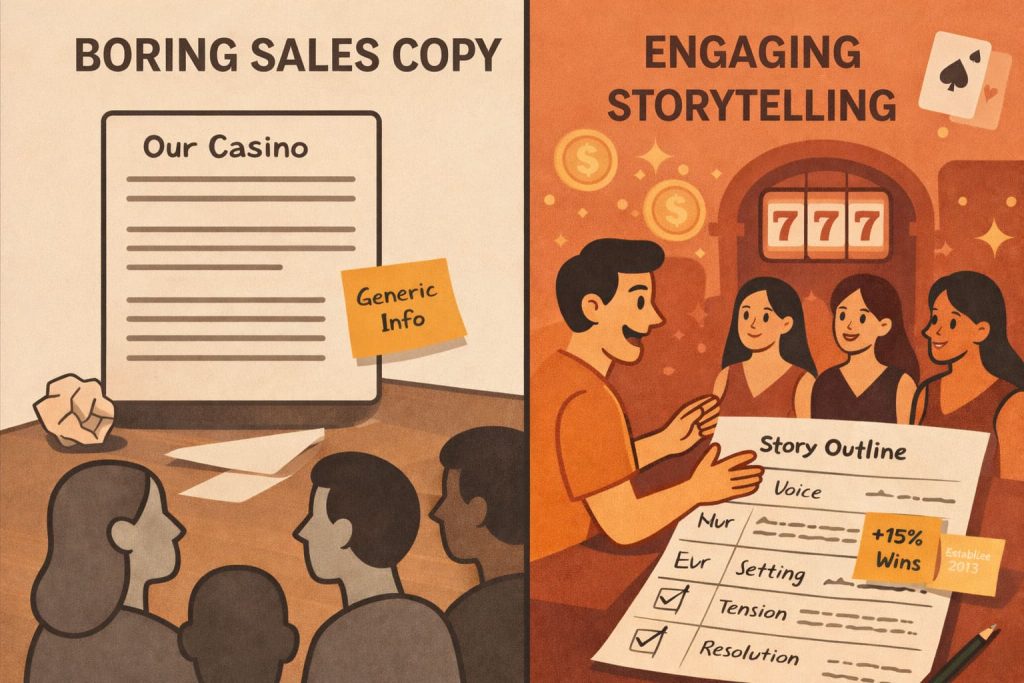
Picture this: you land on an online casino’s “About Us” page. You skim the first paragraph —
something about “passion,” “innovation,” and “world-class entertainment.” The next sentence says
the same thing differently. Within four seconds, your brain has filed this page under “generic”
and your thumb is already moving back. That snap judgment plays out millions of times a day across
the gambling industry.
The stakes are unusually high. Gambling companies are asking people to trust them with real
money, in an industry that already carries heavy scrutiny. A weak story doesn’t just fail to engage —
it actively damages credibility. In gambling, a brand’s narrative is one of its most
powerful trust-building tools.
That gap is smaller than most content teams realise. It comes down to craft — the decisions
writers make about structure, voice, and what details to include or leave out. Some brands handle
this instinctively; others keep recycling the same boilerplate. If you want to see what a
grounded, plain-spoken approach looks like, Visit Jackpot Jill and compare it to the average competitor “About” page.
This piece covers the storytelling techniques that actually work in casino brand content — the
ones that earn trust without resorting to hype. Aimed at writers and editors in iGaming, it’s
practical guidance, not theory.
What Storytelling Actually Does
Good storytelling in brand content isn’t about entertainment. Its real job is quieter: a
well-told brand story reduces uncertainty. When a reader finishes a piece and feels like they
understand who made it and why, the brand has already done something valuable.
Think of it as two layers. On the surface, a brand story tells the reader what the company does.
Underneath, it’s signalling values. The details a brand highlights — transparency about odds, an
honest mention of a limitation, how a complaint was handled — quietly tell the reader what matters
to this company. Brands that ignore this end up with content that never answers the one question
readers are actually asking: “Can I trust this place with my money?”
The Building Blocks of a Credible Story
Every credible brand story relies on a handful of structural elements — the components that make
a narrative feel complete rather than hollow. Missing even one usually makes the whole
piece feel thin.
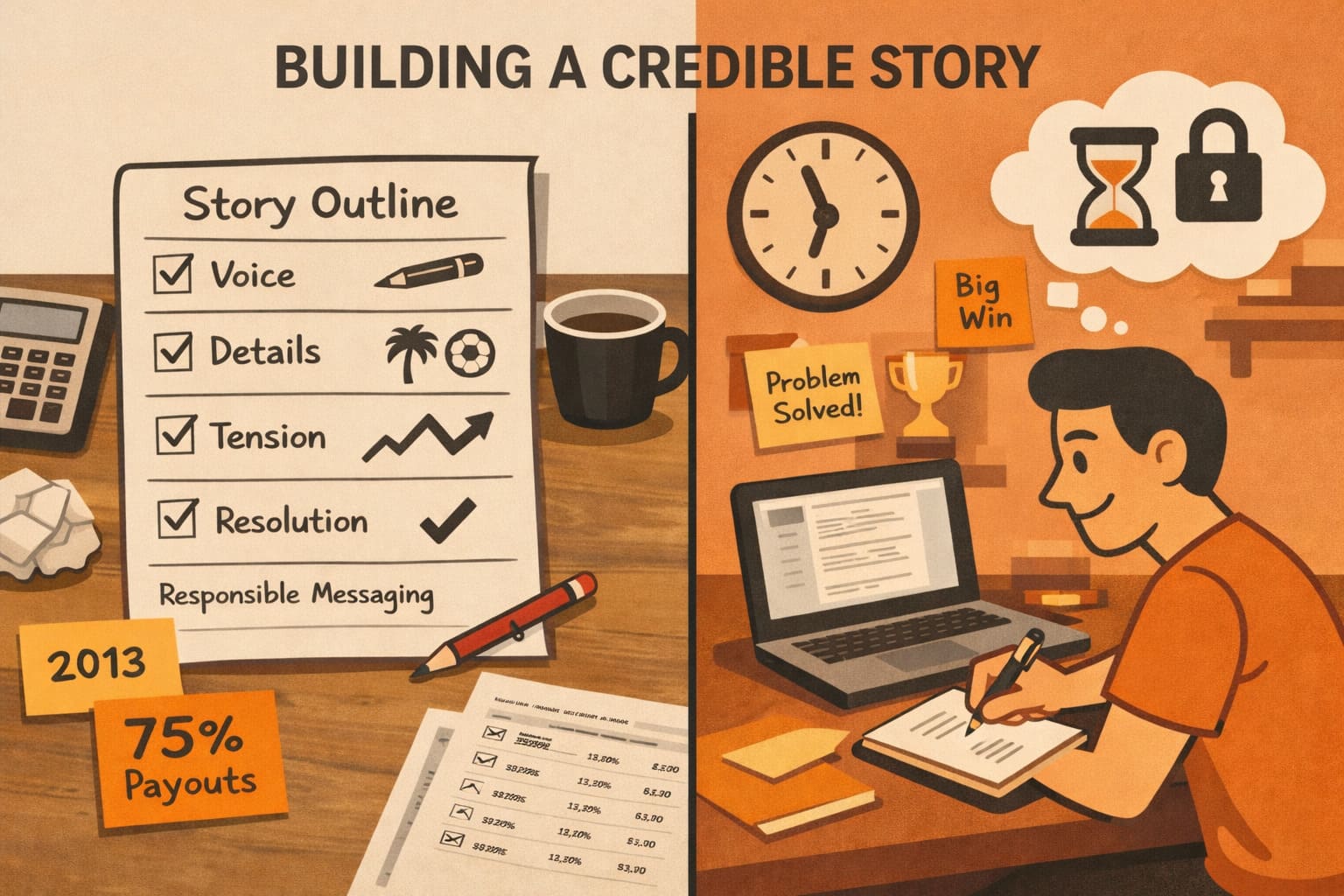
Character is the most underused element. A brand story doesn’t need a hero, but it needs a
perspective — someone speaking, noticing things. Without that, the writing defaults to
corporate voice, which reads as untrustworthy in gambling content. Setting, tension, and resolution
matter too. Even a quiet acknowledgment that building a licensed casino is harder than it looks
creates enough friction to make a story feel honest.
- A real perspective or voice — not generic corporate tone, but something that feels human
- Specific, concrete details — a date, a city, a number that can actually be checked
- An honest acknowledgment of difficulty — what was hard, what didn’t go as planned
- A clear sense of stakes — why this matters to the reader, not just the brand
- A setting beyond a logo and license number — context, geography, history
- Some tension or challenge — even a minor one — to keep the narrative alive
- A resolution that feels earned, not manufactured — progress, not perfection
- Responsible messaging woven in naturally, not bolted on as an afterthought
Story Frameworks That Fit Casino Brands
Not every narrative structure works in regulated industries. A “rebel disruption” story might land
for a fintech startup, but it would raise eyebrows in iGaming. The frameworks below work well in
gambling brand content — provided they’re executed honestly.
The origin story is the most common format: it gives readers a human entry point into what might
otherwise feel like a faceless company. But if the narrative is too polished — every challenge
neatly overcome — it stops feeling real. The “behind the scenes” format sidesteps this by focusing
on process: how a game is built, how a license application works. Unglamorous, but credible.
| Framework | Best Use | Risk If Misused | Safer Approach |
|---|---|---|---|
| Origin Story | Building brand identity and first impressions | Sounds rehearsed or self-congratulatory | Include a real setback or moment of doubt |
| Behind the Scenes | Showing how products or processes actually work | Becomes dry or overly technical | Anchor it to a real person or team |
| Customer Support Narrative | Demonstrating care and responsiveness | Feels scripted or cherry-picked | Use real anonymised scenarios, including complaints |
| Responsible Gambling Commitment | Building trust with regulators and cautious players | Reads as box-ticking compliance copy | Tell a story about why the policy exists, not just that it does |
| Product Evolution | Showing growth and improvement over time | Glosses over versions that didn’t work | Be specific about what changed |
Voice, Tone, and the Details That Signal Truth
Voice is where most casino brand content falls apart. It sounds like it was written by a
committee and sanitised by compliance. The result is content that feels safe but also feels
empty.
The difference often comes down to a single detail. Compare two openings. Version A: “At our
casino, we believe in delivering an exceptional experience, backed by cutting-edge technology.”
Version B: “We launched in 2019 from an office in Gibraltar. The first version of our app
crashed every time someone tried to cash out.” Version B is more trustworthy because it admits
something. Small admissions like that signal honesty — and that signal matters enormously in
gambling content.
Social Proof Without the Cringe
Social proof is a legitimate storytelling tool, but also the one most likely to backfire. Players
know brands curate their reviews, and obviously positive quotes just confirm that suspicion. The
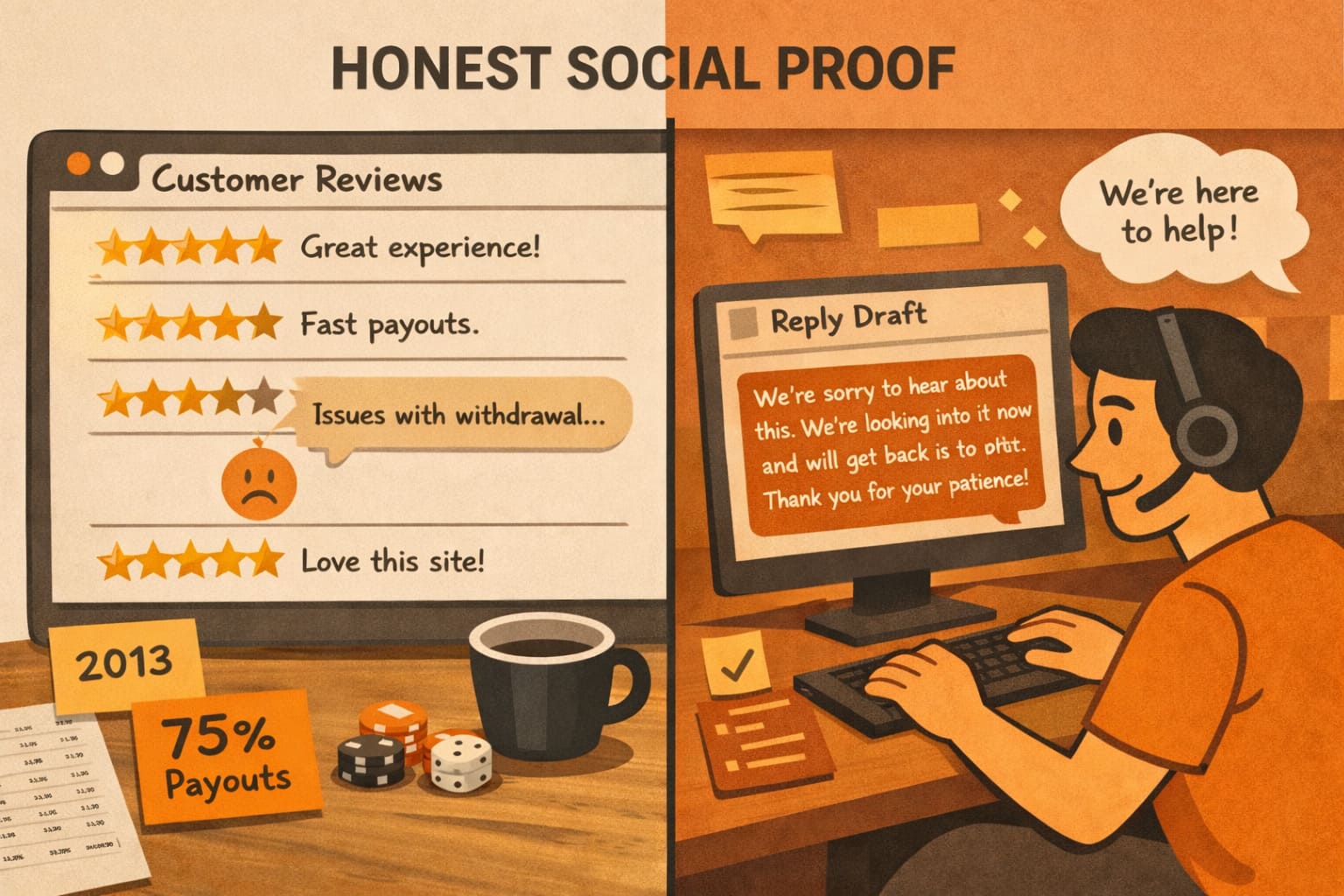
most effective approach isn’t to hide the rough edges — it’s to include them. A review section
showing a mix of ratings, including the brand’s response to critical ones, tells a more convincing
story than five stars across the board.
Community milestones can also work well. The number of players who have used the self-exclusion
tool is a piece of social proof that builds credibility rather than undermining it.
It signals the brand takes player protection seriously enough to discuss it openly.
- Display a genuine mix of player feedback, not only the most flattering quotes
- When showcasing positive reviews, include the context that prompted them
- Show how the brand responded to negative feedback, not just praise
- Use milestone numbers that are independently verifiable where possible
- “Thousands of happy players” says nothing; “14,200 accounts in Q1” says something real
- Include responsible gambling stats alongside engagement metrics
- Never fabricate testimonials or attribute quotes to unnamed players without sourcing
Visual Storytelling and Format Choices
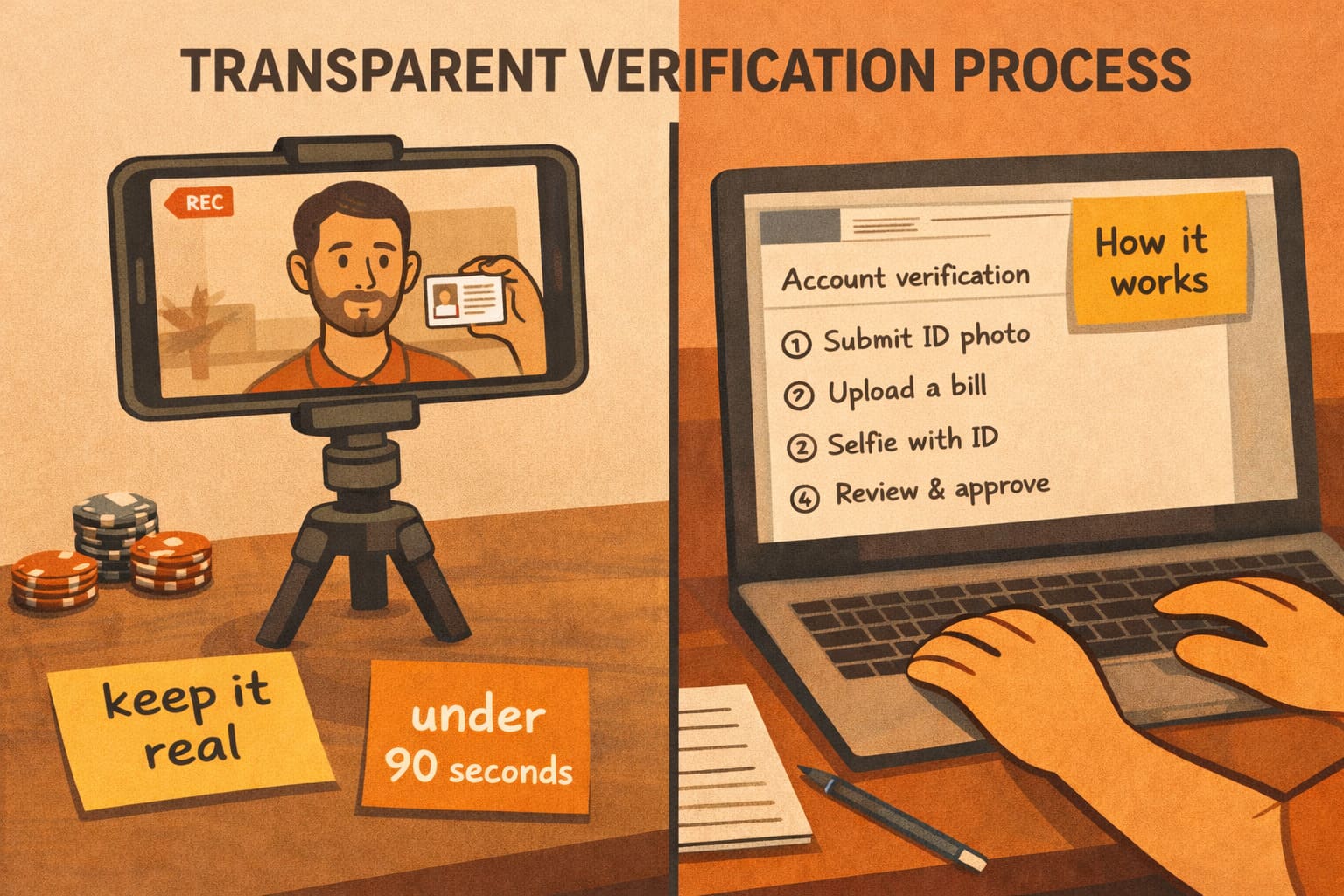
Written copy only reaches so far. A short video showing the process of verifying a new account —
unglamorous as that sounds — can do more for trust than three paragraphs of reassurance. A
real-office photo carries more weight than a glossy brand video. Interactive “how it works” pages
are underused, despite being one of the most effective ways to reduce player anxiety.
| Format | What It Conveys | Common Mistake | Better Implementation |
|---|---|---|---|
| Short Video | Process transparency, human presence | Over-produced, feels like an ad | Keep it under 90 seconds with real people and real screens |
| Photo Captions | Credibility, specificity, context | Stock photography that looks obviously generic | Use real photos with accurate captions |
| Timeline | Growth, honesty about pace | Every milestone looks like a success | Include “lessons learned” moments alongside wins |
| Interactive How-It-Works Page | Clarity, reduced friction, player confidence | Too many steps, overwhelming layout | Focus on the 3–5 steps that matter most |
Handling Risk Topics Honestly
This is where most content teams get nervous — and where the best storytellers shine. Bonus
terms, withdrawal timelines, KYC, complaints: all uncomfortable to write about. But avoiding them
is a storytelling failure. Silence on hard topics reads as evasiveness, and
evasiveness is one of the fastest ways to lose trust.
It means acknowledging reality plainly. If withdrawals take longer during busy periods, say so.
If a KYC check feels frustrating, explain why it exists. This kind of writing is harder to produce
than promotional copy, but it’s also much harder to fake.
Responsible gambling messaging deserves particular care — it shouldn’t be buried in a footer or
treated as a checkbox. Weaving harm-reduction information naturally into brand storytelling is both
an ethical obligation and a trust signal. Organisations like
GambleAware
offer frameworks content teams can draw on. Player safety and good storytelling aren’t in conflict —
the best casino brand stories treat them as the same goal.
A Practical Checklist for 2026
Here’s a condensed checklist for editors to run through before a draft goes live. Whether
you’re at a major operator or a smaller platform like Jackpot Jill, these checks are
worth the time.
- Truth test: Is every factual claim in this piece verifiable? If not, revise it
- Perspective check: Does this read like a real person wrote it, or like a template?
- Specificity audit: Are there concrete details — dates, numbers — that ground the story?
- Honesty signal: Does the piece acknowledge anything difficult? If not, it probably needs to
- Responsible messaging: Is harm-reduction info naturally integrated?
- Tone consistency: Does the voice stay steady throughout, or does it shift into “legal disclaimer” mode?
- Reader value: Would a player learn something useful?
- Compliance review: Has the piece been checked against current regulatory guidelines?
- Read-aloud test: Read it aloud. If a sentence trips you up, rewrite it
| Check | Why It Matters | Quick Test |
|---|---|---|
| Factual accuracy | One wrong claim undermines the whole piece | Google the key numbers and dates before publishing |
| Tone authenticity | Readers detect corporate voice immediately | Swap a synonym for every adjective — if nothing changes, the adjective was empty |
| Responsible gambling integration | Ethical obligation and credibility signal combined | Could a player find harm-reduction info without digging? |
| Originality | Copied frameworks erode brand identity | Compare your first paragraph to three competitor pages — does it say anything different? |
The Bottom Line
Trust in gambling is slow to build and fast to lose. A single careless piece of content can undo
months of careful storytelling. The techniques here aren’t complicated — they’re mostly about
choosing honesty over polish, specificity over vagueness, and a genuine human voice over sanitised
corporate language.
The best casino brand stories don’t try to impress anyone — they simply tell the truth,
clearly and without fuss. That’s harder than it sounds, but it’s the only approach that
works long-term in an industry where readers have every reason to be sceptical.