
Picture this: you’re traveling for work, using the Wi-Fi at your hotel, and you decide to log into an account you use back home. Maybe it’s a streaming service. Maybe it’s an online casino. You glance at the network name — “HotelGuest_5G” — and something nags at you. Who else is on this network? Is your login information visible to anyone watching? It’s the kind of low-grade anxiety that has quietly pushed millions of people toward VPNs, even when they’re not entirely sure what a VPN does.
Online gambling platforms bring that anxiety into sharper focus. These accounts hold real money, sensitive payment details, and identity documents. People use them on laptops in airport lounges and on phones in coffee shops. It’s no surprise that questions about VPN use come up constantly in forums, support chats, and consumer privacy communities. The question seems straightforward. The answer, it turns out, is not.
The core tension is this: a VPN can genuinely improve the security of your connection on untrusted networks. But the moment you point that VPN at an online casino, you’ve introduced a separate set of problems — account flags, verification friction, possible terms-of-service violations, and legal questions that depend entirely on where you are and who operates the platform. Privacy protection and platform permission are two very different things, and confusing them is where most people get into trouble.
A lot of the advice floating around online treats VPNs for online gambling as either a magic solution or an automatic ban trigger. Neither framing is accurate. The reality depends on why you’re using one, what the platform’s terms actually say, what jurisdiction you’re in, and whether your connection, payment method, and verified identity all tell a consistent story. When reviewing how these issues may affect access in practice, users sometimes compare the policies and support guidance of live operators such as Uptown casino. When the details don’t match, platforms notice.
There’s also the practical side. VPNs add a layer of routing between your device and the internet. That routing introduces latency. Some casino platforms actively check for known VPN IP addresses and will block or flag traffic from them automatically, regardless of your intentions. Others don’t. Enforcement varies widely, and it’s rarely published clearly in the FAQ.
This guide doesn’t take a side. It won’t tell you to use a VPN, and it won’t tell you not to. What it will do is walk through what a VPN actually does, where the real benefits lie, where the genuine risks appear, and what questions you should answer honestly before you make a decision. Laws and platform rules change. What’s written here reflects general principles — always check the specific terms of any platform you use and the gambling laws in your location before acting.
What a VPN Does
A VPN — Virtual Private Network — creates an encrypted tunnel between your device and a server operated by the VPN provider. Your internet traffic travels through that tunnel before reaching its destination. To websites and services you visit, your connection appears to originate from the VPN server’s location rather than your actual one. Your IP address is masked, your traffic is encrypted between your device and the VPN server, and anyone monitoring the network you’re physically on cannot easily read what you’re doing.
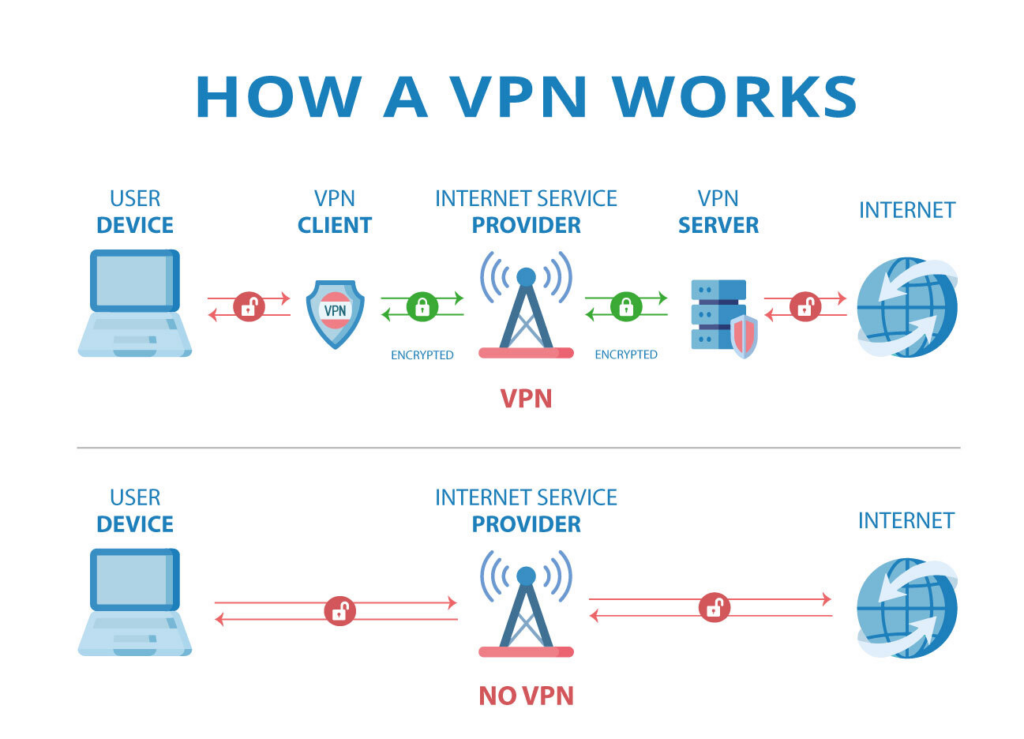
That’s a meaningful protection on genuinely hostile networks. Public Wi-Fi at airports, hotels, and coffee shops is a documented target for basic snooping tools. Encrypting your traffic before it leaves your device is a reasonable precaution, endorsed by security researchers and organizations like the Electronic Frontier Foundation as part of good digital hygiene. But it’s important to be precise about what the protection covers — and where it ends.
A VPN does not make you anonymous. The VPN provider itself can see your traffic. The platform you’re logging into can still identify your account, your payment methods, and your verified identity. And crucially, a VPN does not change what the law requires or what a platform’s terms permit. These are separate systems operating independently of your connection security.
- Can do: Encrypt your connection on untrusted networks
- Can do: Mask your real IP address from the destination website
- Can do: Route your traffic through a server in a different location
- Can do: Reduce exposure to basic network-level snooping
- Cannot do: Remove your identity from a platform that has already verified you
- Cannot do: Change your legal jurisdiction or residency
- Cannot do: Override a casino’s terms of service or licensing conditions
- Cannot do: Bypass KYC (Know Your Customer) or AML (Anti-Money Laundering) checks
- Cannot do: Guarantee your account won’t be flagged for unusual location activity
- Cannot do: Make you anonymous if the platform has your real identity on file
Why Players Consider VPNs
People arrive at this question from several different directions. Some are genuinely worried about network security — they travel often, use shared Wi-Fi regularly, and see a VPN as sensible hygiene for all their sensitive logins, not just gambling accounts. That’s a reasonable position. Shared networks carry real risks, and the habit of encrypting your connection wherever you go is one that security professionals broadly support.
Others are motivated by privacy concerns that go beyond the network layer. They’d rather not have their browsing habits logged by their ISP, or they want to reduce the general data trail they leave online. Again, a legitimate concern — though one that has nothing specifically to do with gambling platforms.
A third group is trying to access a platform that’s restricted or blocked where they are. This is where the conversation gets complicated fast. Using a VPN to reach a service your jurisdiction doesn’t permit — or to sidestep a self-exclusion you’ve agreed to — is a very different act than using one to protect your connection on hotel Wi-Fi. One is a privacy practice. The other may violate platform terms, local law, or both. The distinction matters enormously, and it’s one that gets blurred too often in casual discussion of this topic.
The Benefits
For users with genuine, lawful reasons to protect their connection, a VPN offers real advantages — provided the platform permits its use and no location inconsistency is created. The most clear-cut benefit is on networks you don’t control. If you’re logging into any sensitive account from public Wi-Fi, an encrypted connection is a sensible precaution. Casino accounts tend to hold payment credentials and identity documents, which makes them especially worth protecting.
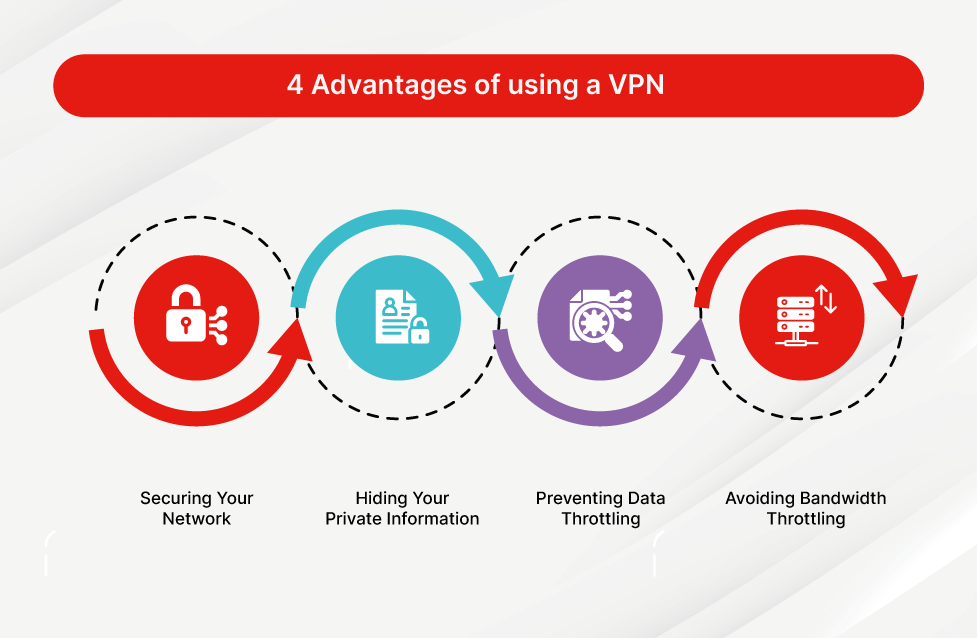
There’s also value in the general privacy habit. People who use VPNs consistently across all their browsing are less likely to make impulsive decisions about when protection matters. It’s better as a constant than as a thing you remember sometimes. That said, a VPN is only one layer of security — strong, unique passwords and two-factor authentication matter more for actual account security than the VPN layer alone.
| Potential Benefit | When It Helps | Important Limitation |
|---|---|---|
| Encrypted connection | Using public or shared Wi-Fi networks | Doesn’t protect you from platform-side data breaches |
| IP address masking | Reducing exposure to network-level logging by ISPs | Platform still sees your account identity and payment info |
| Consistent privacy habits | Routinely protecting all sensitive logins | Can create location inconsistency flags if VPN location differs from registered address |
| Reduced ISP visibility | General browsing privacy on home networks | VPN provider itself can log your traffic; provider choice matters |
The Risks
The risk side of this equation is less theoretical and more operational. People using VPNs with casino accounts run into real problems — some minor, some serious — that don’t always have easy solutions once they’ve started. The most common is the login flag. When your account suddenly appears to connect from a different country or region, fraud detection systems take notice. That might mean nothing. Or it might trigger a manual account review, a temporary hold, or a request to re-verify your identity before you can withdraw funds.
Payment mismatches are another recurring issue. If your registered address is in one country, your payment method is tied to that country’s banking system, and your VPN is routing through a third country, the inconsistency can raise red flags under anti-fraud and anti-money-laundering procedures. Platforms are required by their regulators to monitor for exactly this kind of pattern. The intent behind the VPN use is irrelevant to the automated system catching the discrepancy.
There’s also the purely technical problem: VPNs slow things down. Adding routing hops adds latency. Some providers are more reliable than others, and an unstable VPN connection mid-session can create its own problems — interrupted connections, session timeouts, or errors during payment processes. These are inconveniences rather than catastrophes, but they matter.
- Account flagged for unusual login location, triggering manual review
- Withdrawal held pending re-verification due to location inconsistency
- Session disrupted by VPN instability or sudden disconnection
- Payment blocked because VPN location doesn’t match payment method’s registered country
- Account suspended for terms of service violation if VPN use is prohibited
- Bonus or winnings voided in cases where platform terms explicitly prohibit VPN use
- Increased latency affecting live games or time-sensitive interactions
- IP flagged as belonging to a known VPN range, causing automatic blocks or CAPTCHAs
- Support escalation if inconsistencies are discovered during a withdrawal or complaint process
Terms and Local Rules
Every licensed online gambling platform operates under a regulatory framework, and most publish terms of service that address — directly or indirectly — how they expect users to connect. Some platforms explicitly prohibit VPN use. Others don’t mention it at all. A few permit it in limited circumstances. The variation is wide enough that blanket statements in either direction are unreliable.
What’s consistent is that platforms have the right to enforce their terms however they see fit. If their terms say that using a VPN voids a bonus, or that connecting through an IP address inconsistent with your registered location may result in account suspension, those clauses tend to hold up. By the time you’re reading the fine print after a problem, it’s too late.
Local law adds another layer. Gambling regulations vary enormously by country — and in countries like the United States, by state. Using a VPN to appear to be in a jurisdiction where gambling is permitted, when you’re physically in one where it isn’t, is not a gray area in most places. It’s a straightforward attempt to circumvent the law. A VPN changes the IP address your traffic comes from. It does not change your legal residency, your obligations, or the applicable jurisdiction. Anyone considering this should consult their local laws and, frankly, legal advice — not an internet article.
KYC and Identity Checks
KYC — Know Your Customer — requirements are not a platform choice. They’re a legal obligation for licensed gambling operators in most jurisdictions, designed to prevent money laundering, fraud, and underage access. When you verify your identity on a casino platform, you are creating a permanent link between your account and your real-world identity. A VPN does not touch this layer. It never has. The VPN changes where your traffic appears to come from. It does not change who you are.
Where location masking creates friction in KYC processes is in the mismatch between stated identity and observed behavior. If your verified address is in Germany, your payment method is a German bank card, but your logins consistently originate from what appears to be a server in Singapore, a compliance officer reviewing that pattern has questions. Those questions typically pause your access to funds until they’re resolved — and resolving them means providing more documentation, not less.
| Issue | Why It Matters | What Users Often Misunderstand |
|---|---|---|
| VPN IP doesn’t match registered country | Triggers fraud and AML monitoring patterns | Thinking the VPN “hides” identity — it doesn’t hide account-level identity |
| Payment method country differs from VPN location | Multiple inconsistencies compound each other | Assuming payment processing looks at VPN location rather than card issuer country |
| Sudden country change at login | Looks like account takeover from fraud detection perspective | VPN location is visible to platforms even when browsing feels “private” |
| Identity verified in one country, activity appearing from another | May require enhanced due diligence under platform’s compliance obligations | KYC is about identity, not connection location — a VPN doesn’t satisfy or bypass it |
Privacy vs. Access
This is the distinction that matters most, and it’s the one that gets muddled most often. Using a VPN to protect your connection on a shared network is a privacy practice. Using a VPN to appear to be in a different country so you can access a service that’s restricted where you actually are is something else entirely. The technology is the same. The intent and the implications are completely different.
A lot of the online discussion about VPNs and casinos doesn’t draw this line clearly, and that’s a problem. If you’re logged into a platform with your real name, your real bank account, and your verified ID — and you’re using a VPN purely because you don’t trust the coffee shop’s Wi-Fi — you are using a privacy tool for a privacy purpose. Your connection is more secure. Your identity is unchanged. Whether that specific use is permitted depends on the platform’s terms, but the intent is legitimate.
The scenario where someone uses a VPN to access a service in a jurisdiction where they have no legal right to use it is a different act. No amount of privacy framing changes what it actually is: an attempt to circumvent a restriction. Platforms know this. Regulators know this. And enforcement, while inconsistent, is real. Account terminations, voided balances, and reported violations are documented outcomes in this space. The risks are not hypothetical.
When a VPN Makes Sense
There are legitimate, sensible reasons to use a VPN even in the context of online accounts that handle money. The key is that the use case is genuinely about connection security — not about changing your apparent location. If you travel frequently and use the same accounts from hotels, airports, and unfamiliar networks, a consistently used VPN is a reasonable security practice, provided the platform you’re using permits it.
The important discipline is to use your VPN consistently and from a location that doesn’t create inconsistencies with your account’s registered information. Some users set their VPN to always connect through their home country’s servers — this provides connection-layer encryption while avoiding the location-mismatch problem. It’s not a perfect solution, since VPN IP addresses are often on known lists, but it’s more consistent behavior than bouncing between regions.
- You regularly use public or hotel Wi-Fi for sensitive logins and want connection-layer protection
- Your home ISP logs browsing data and you want to limit that exposure as a general practice
- You’re connecting from a network environment you don’t control and have reason to distrust
- You want to maintain consistent security habits across all sensitive accounts, not just gambling ones
- The platform you use has been checked and does not prohibit VPN connections in its terms
- Your VPN connection routes through the same country as your registered account address
- You have verified your identity with the platform and have no outstanding compliance flags
- You understand that the VPN protects your connection, not your identity or your legal obligations
When It Can Backfire
The situations where VPN use causes the most trouble tend to share a common feature: inconsistency. Someone who travels internationally and forgets their VPN is set to a different country’s server logs in and triggers a location flag. Someone using a residential VPN service for privacy suddenly appears to be connecting from a commercial IP range. Someone moves to a new city, keeps their old account registered to their previous address, and now their VPN, payment method, and stated address are all pointing at different places. Platforms see patterns, and patterns like these invite scrutiny.
Withdrawal requests are when these inconsistencies tend to surface most visibly. Many platforms perform additional identity verification at withdrawal, especially for larger sums. If the account history contains location anomalies — repeated logins from IPs associated with VPN providers, connections from multiple countries in a short window — that review process can be extended. Some users have reported waits of days or weeks while compliance teams investigated. A few have had accounts closed with funds held pending investigation.
There’s also the support problem. If something goes wrong with your account — a failed payment, a disputed transaction, a technical error — and your account activity shows repeated VPN use in apparent violation of the platform’s terms, you may find yourself in a weak position when seeking resolution. Your complaint is harder to process when the platform’s first question is about why your login history is inconsistent with your registered details.
A Safety Checklist
Before using a VPN with any platform that holds money and personal identity data, it’s worth working through a few practical questions. This isn’t about following rules mechanically — it’s about not being surprised by consequences that were entirely predictable.
| Stage | What to Check | If Something’s Wrong |
|---|---|---|
| Before logging in | Check platform terms for VPN policy; confirm your VPN location matches your registered country | Disconnect VPN or confirm you’re allowed to connect from that server location |
| During a session | Watch for unusual prompts, re-verification requests, or session errors | Pause, disconnect, reconnect from a clean connection before proceeding |
| If a problem appears | Note whether VPN was active; be transparent with support if asked | Contact support with full information — inconsistency discovered later is harder to resolve |
- Have I read this platform’s terms of service section on VPNs, proxies, or location requirements?
- Is gambling with this platform legal where I physically am right now?
- Does my VPN server location match my registered account address?
- Does my payment method’s country of issue align with my registered address?
- Have I completed this platform’s identity verification with accurate information?
- Am I using a VPN for connection security, or am I trying to appear to be somewhere I’m not?
- If something goes wrong with a withdrawal or complaint, can I explain my VPN use honestly?
- Do I know whether my VPN provider logs my activity and under what conditions they share it?
The Bottom Line
A VPN is a connection security tool. It encrypts your traffic and masks your IP address. On untrusted networks, that’s genuinely useful, and there’s nothing inherently wrong with using one as part of a general privacy habit. But it does not change your legal obligations, your identity, or what a platform’s terms permit. It protects the pipe. It doesn’t change the rules at the other end.
The people who get into trouble with VPNs and gambling accounts are mostly not doing anything dramatically wrong — they’re people who didn’t read the terms carefully, or who didn’t think through the location inconsistency problem, or who assumed that “private connection” meant “permitted access.” Those are understandable mistakes. They can also be costly. The smarter path is to check the platform’s terms, confirm you’re operating within your local law, verify that your connection information is consistent with your registered identity, and use a VPN only when it genuinely adds security value without adding compliance risk.
For broader guidance on digital privacy practices that apply across all your sensitive online accounts, the EFF’s Surveillance Self-Defense guide is a thorough, non-commercial resource written for general audiences. It won’t tell you whether a specific casino permits VPNs — but it will help you build a security posture that’s actually grounded in how these tools work.
Privacy is worth protecting. So is knowing exactly what you’re doing before you act.